Meeting of the Executive Committee of the Ibn Sina Research and Development Organization
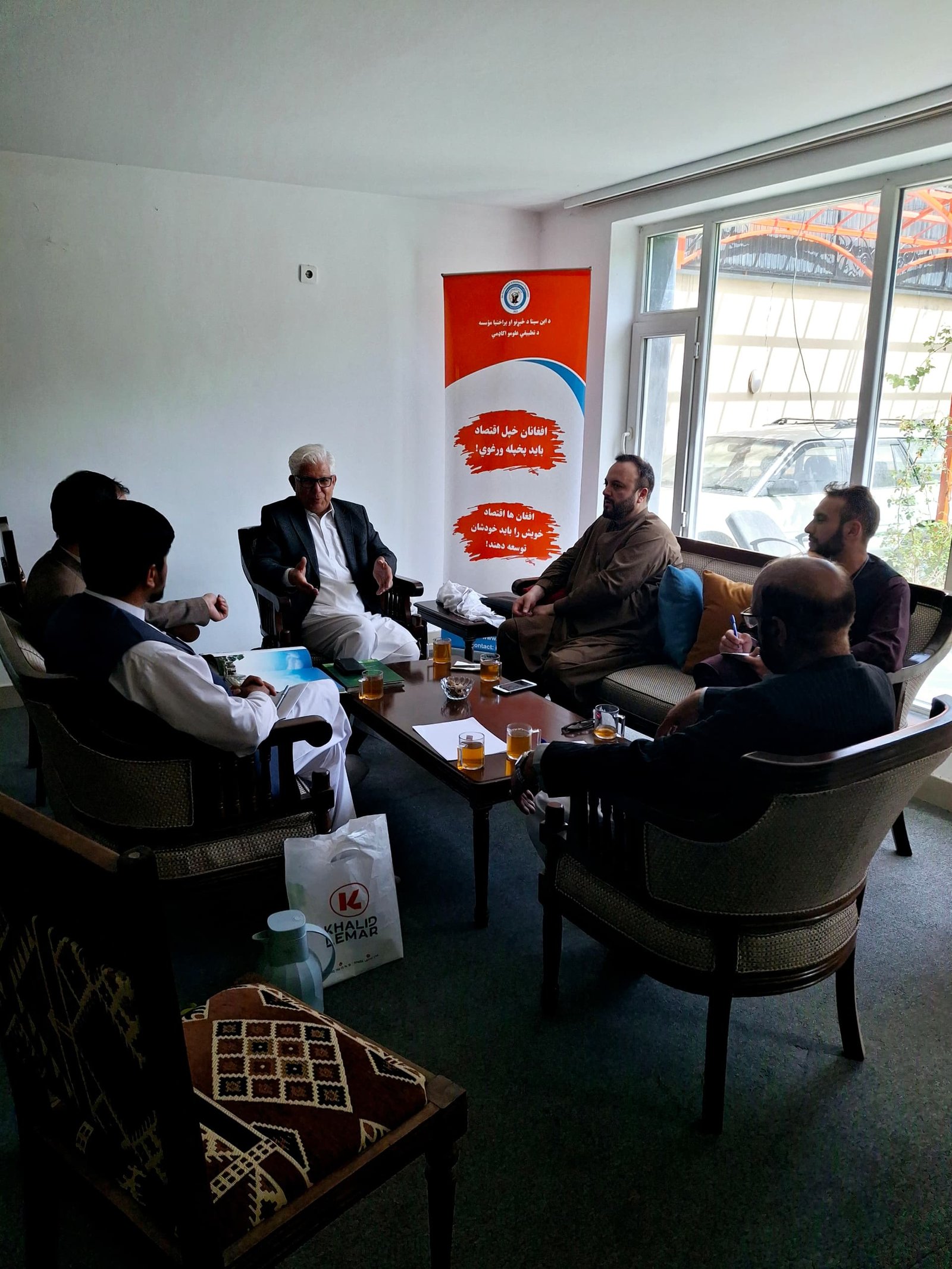
On Saturday, April 19, 2025 (corresponding to 30th of Hamal 1404), the Executive Committee of the Ibn Sina Research and Development Organization convened a strategic meeting at the Organization’s Central Office in Kabul. The session was held to enhance coordination and streamline the organization’s operations.
The meeting was attended by Dipl. Eng. Ghulam Sakhi Hassanzada, a senior member of the organization’s Leadership and Advisory Board; Dr. Mohammad Akram Azimi, Executive Director of the organization; and esteemed advisors including Eng. Mohammad Shoaib Sahibzada, Dr. Abdul Ghani Naseri, and Mr. Imran Zakaria. Also in attendance were key staff members from the Kabul Central Office: Mr. Masoud Barakzai, Mr. Jawad Nikzad, and Mr. Saif Rahman Ishaqzai.
The session was formally inaugurated by Dr. Mohammad Akram Azimi, who welcomed Dipl. Eng. Ghulam Sakhi Hassanzada upon his return to Afghanistan. Dr. Azimi outlined the meeting agenda and elaborated on its objectives.
In his remarks, Mr. Hassanzada emphasized that the purpose of his visit was to contribute to the effective organization of the entity’s operations and to engage in constructive dialogue with officials of the Islamic Emirate of Afghanistan. He praised the organization’s recent efforts as admirable and impactful.
Mr. Hassanzada highlighted the critical importance of research institutions for national progress. He referenced successful international models such as the United States and China, where research centers have played a pivotal role in advancement. He stressed that Afghanistan is in urgent need of such institutions to conduct research across key sectors, including industry, energy, agriculture, commerce, healthcare, and education, in order to address national challenges and promote sustainable development.
As an example, he pointed to Afghanistan’s reliance on neighboring countries for electricity, calling for the prioritization of domestic infrastructure projects moving forward.
To support the growth and coordination of the Ibn Sina Research and Development Organization, Mr. Hassanzada proposed a strategic framework consisting of three key components: 1. Organizational Strengthening of Ibn Sina 2. Establishment of Transparent and Collaborative Partnerships 3. Promotion of Research and Productive Capacity
Additionally, the organization’s leadership announced the formulation of a two-year operational plan (2025–2026). Once finalized, this strategic document will guide the organization’s direction and clearly define roles and responsibilities for all personnel.
In closing, members exchanged views, contributed insights, and made several key decisions aligned with the organization’s vision and goals.
Ibn-E-Sina Research and Development Organization Kabul